50-Million-Cycle Ultra-High-Speed Linear Motor Power Cable
Long-life high-flex power cable with TPE insulation, enhanced braid and special PUR sheath
- Specified for 50 million cycles under defined dynamic test conditions.
- Mobile minimum bend radius stated as six times cable diameter.
- Four-core and combined power-plus-auxiliary constructions available.
Product Overview
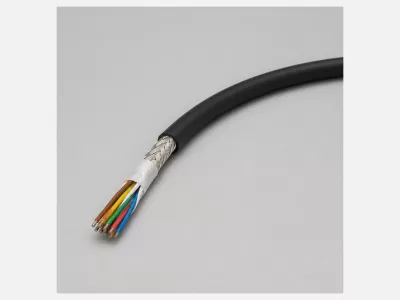
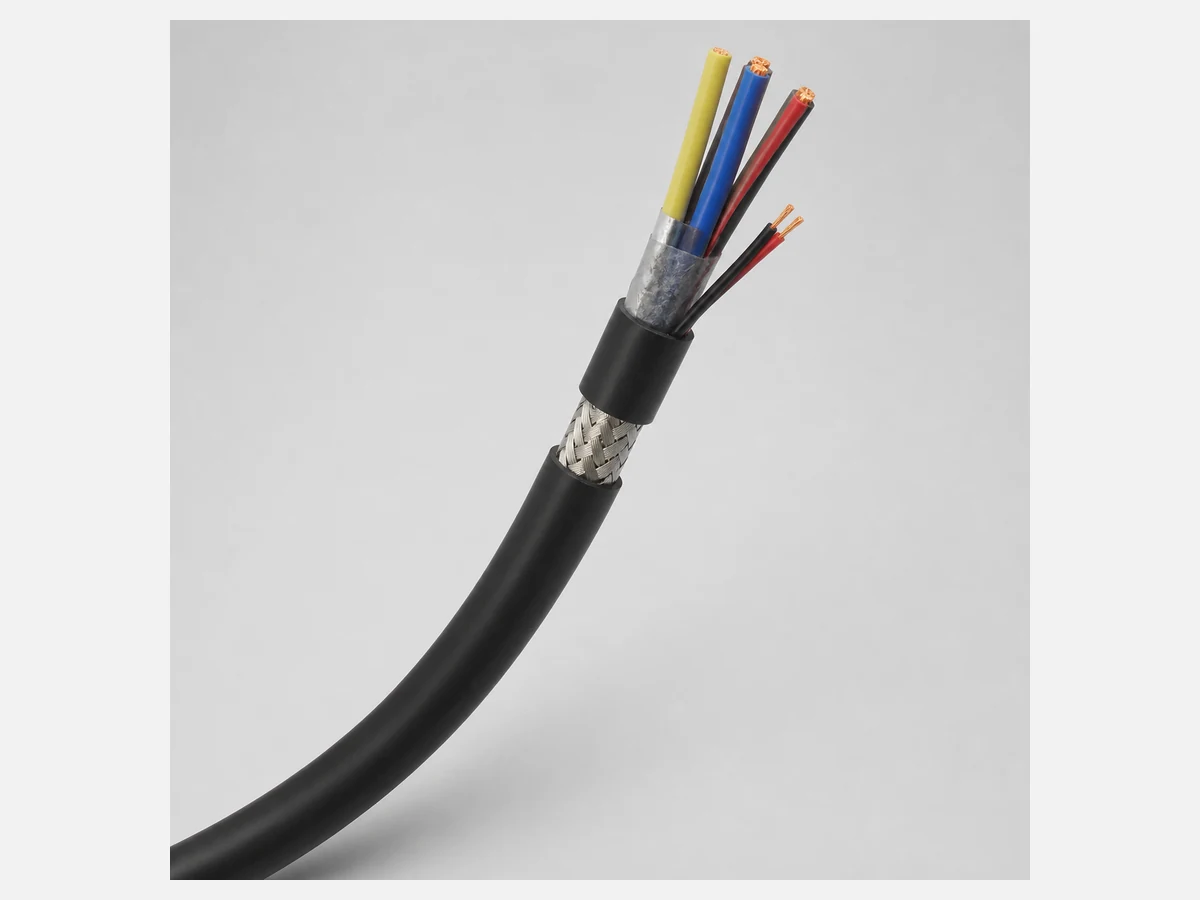
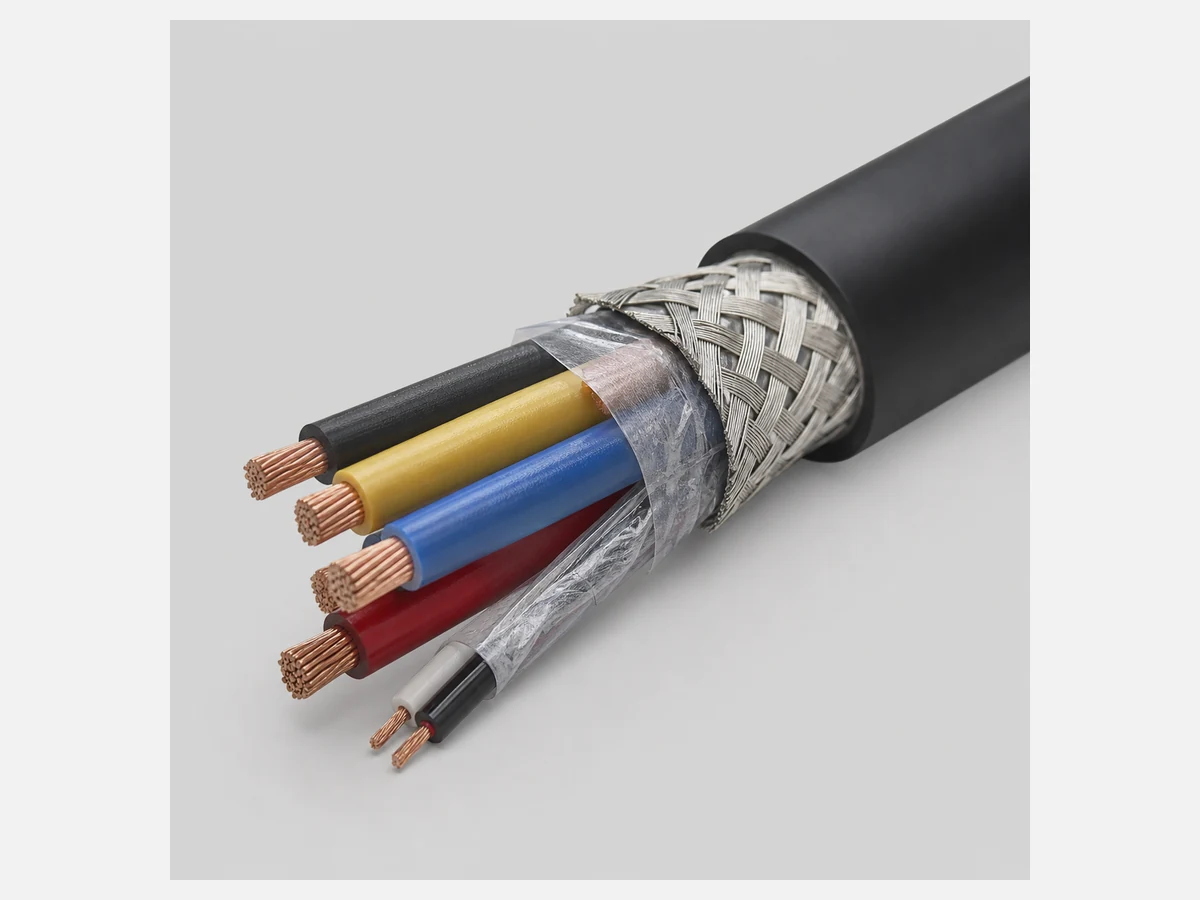
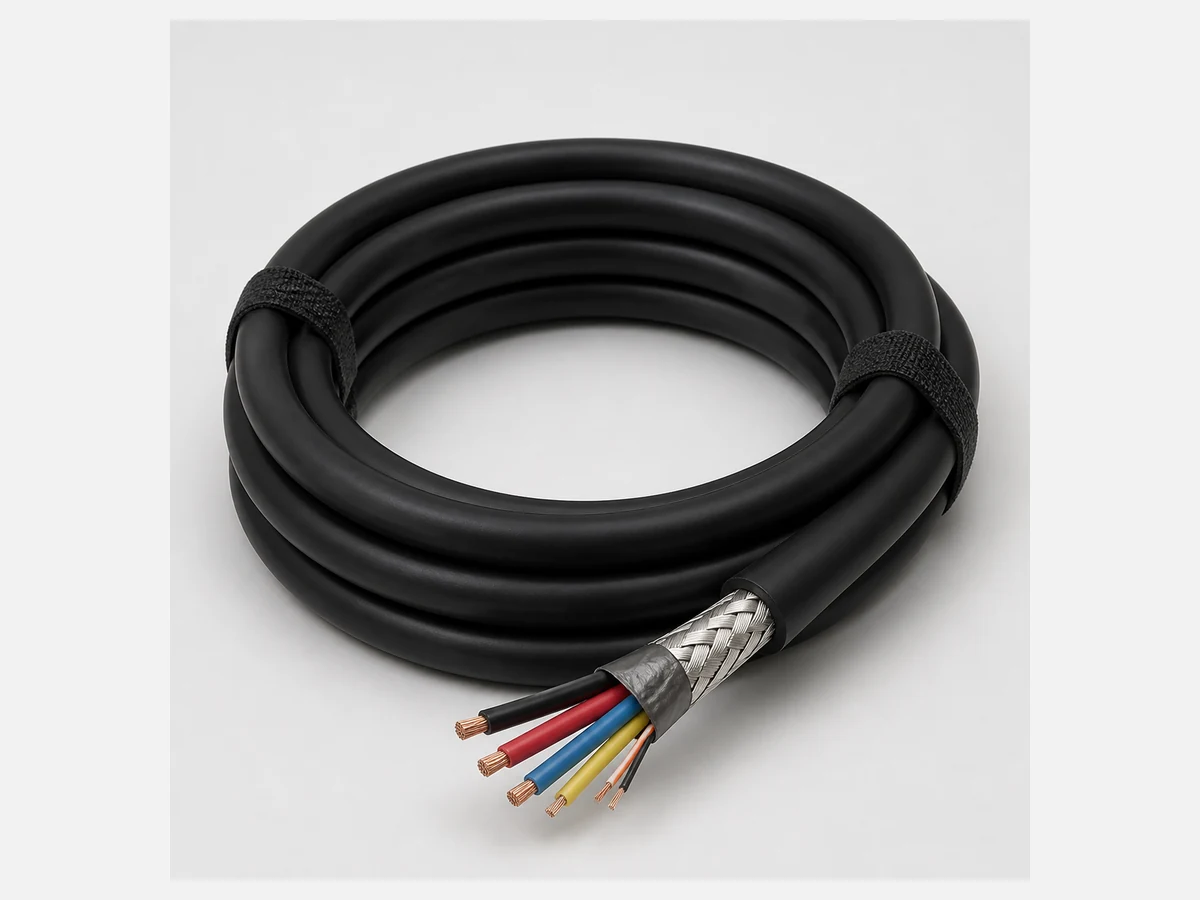
This 50-million-cycle ultra-high-speed linear motor power cable is specified for exceptionally demanding reciprocating motion in compact automation equipment. The construction combines fine-stranded tinned-copper conductors, special TPE insulation, PP core filling, an improved tinned-copper braided screen and a black special PUR outer sheath. According to the supplied data, the cable is rated U₀/U 300/500V, tested at 2000V and designed for mobile temperatures from -20°C to +80°C and fixed installation from -40°C to +90°C. Four-core power sizes and a combined power-plus-auxiliary construction are listed, supporting tailored linear-motor wiring without changing the documented parameters.
Key Features
- 50-million-cycle service target stated for the specified ultra-high-speed linear-motor application.
- Fine-stranded tinned-copper conductor to DIN VDE 0295 Class 6 and IEC 60228 Class 6.
- Special TPE core insulation for demanding repetitive motion.
- PP filling supports a controlled and compact core assembly.
- Improved tinned-copper braided screen with stated minimum 90% coverage.
- Black RAL 9005 matt special PUR outer sheath.
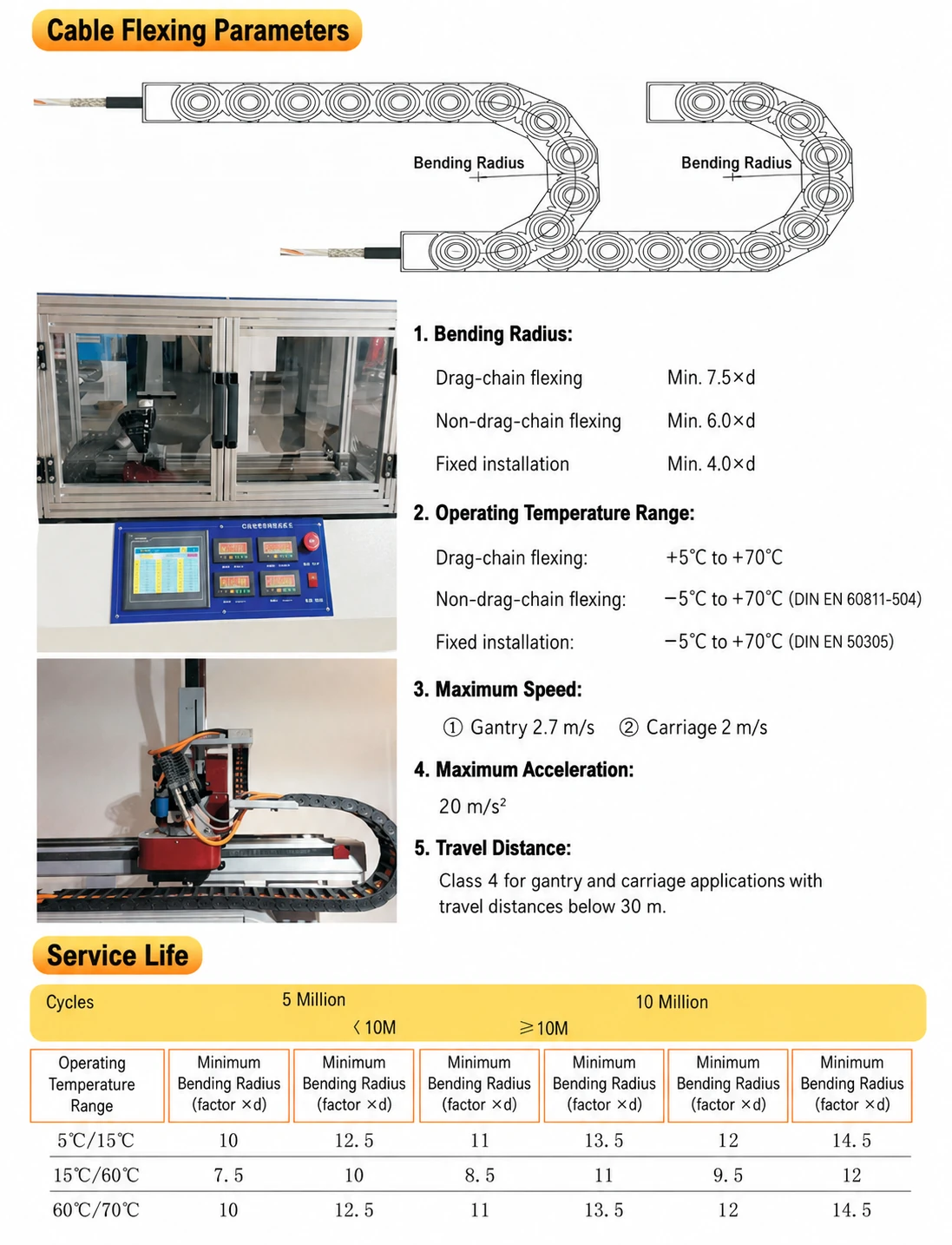
- Mobile bend radius stated as 6 × cable diameter; fixed radius 4 × diameter.
- Includes a listed combined 4×0.5 + 2×0.4 mm² power-and-auxiliary construction.
Product Specifications
| Product function | Ultra-high-speed linear motor power cable |
|---|---|
| Cycle rating | 50 million cycles, supplied specification |
| Conductor | Fine-stranded tinned copper, DIN VDE 0295 / IEC 60228 Class 6 |
| Insulation | Special TPE, color coded |
| Core assembly | Twisted cores with PP filling |
| Shield | Improved tinned-copper braid, minimum stated coverage 90% |
| Outer sheath | Special PUR, black RAL 9005 matt |
| Reference requirement | TÜV 2 PfG 2577 Class V, as stated in supplied data |
| Rated voltage | U₀/U 300/500V |
| Test voltage | 2000V |
| Mobile temperature | -20°C to +80°C |
| Fixed temperature | -40°C to +90°C |
| Insulation resistance | Minimum 100 MΩ·km |
| Bend radius | Mobile 6 × OD; fixed 4 × OD |
| Available constructions | 4×0.5 mm², OD 5.2 mm; 4×0.75 mm², 6.8 mm; 4×1.0 mm², 7.5 mm; 4×1.5 mm², 8.0 mm; 4×0.5 + 2×0.4 mm², 6.2 mm |
Applications
Intended for ultra-high-speed linear motors, precision positioning axes, advanced semiconductor equipment and repetitive automation modules where very long flex life is required. The combined 4×0.5 + 2×0.4 mm² version can support applications needing power conductors plus an auxiliary pair within one screened cable. Actual service life depends on routing, cable carrier design, bend radius, acceleration, speed, stroke and environmental exposure; the stated cycle figure must be evaluated against the customer’s operating profile.
Customization Options
Choose from the listed four-core sizes or the combined power-and-auxiliary construction. OEM options include conductor colors, auxiliary-pair identification, jacket legend, finished length, customer logo, connector or terminal preparation and export packaging. Any change affecting diameter, flex performance or electrical behavior requires a confirmed drawing and engineering approval.
Packaging & Shipping
Long-life dynamic cable is wound on appropriately sized reels or broad coils to protect the specified bend radius. Cut ends can be sealed, tagged and separated for connector processing. Reels, cartons and pallets are selected after length and quantity are known. Packing dimensions, gross weight, shipping marks and transport method are confirmed in the commercial documentation.
Manufacturing & Quality Control
The production plan controls fine tinned-copper stranding, TPE insulation concentricity, auxiliary-pair placement where used, PP filling, screen coverage and PUR sheath dimensions. Electrical testing includes circuit continuity, conductor resistance, insulation resistance and voltage withstand. Dynamic bending validation is tied to the approved cable construction and controlled test setup. Lot identification, dimensional records and applicable RoHS/REACH documents are available upon request.
FAQ
1. What differentiates this cable from the 20-million-cycle version?
The supplied specification states a 50-million-cycle target and a smaller mobile bend radius of 6 × OD.
2. Which standard constructions are listed?
Four-core sizes from 0.5 to 1.5 mm² and a 4×0.5 + 2×0.4 mm² combined construction are listed.
3. What voltage is specified?
The cable is listed at U₀/U 300/500V with a 2000V test voltage.
4. What materials are used?
The sheet specifies tinned-copper conductors, special TPE insulation, an improved braid and a special PUR sheath.
5. Is the 50-million-cycle value application-independent?
No. Actual life depends on bend radius, routing, speed, acceleration, stroke and environment.
6. Can the auxiliary pair be customized?
Pair identification and termination can be reviewed for OEM assemblies.
7. Can connectors be added?
Connectorized assemblies are possible after drawings, pinout and overmolding requirements are approved.
8. What is the minimum mobile bend radius?
The supplied value is six times the cable outside diameter.
9. What quality documentation is available?
Available dimensional, electrical, dynamic and compliance records depend on the final order specification.
10. What data is needed for quotation?
Provide construction, length, motion profile, bend radius, termination, quantity, destination and documentation needs.
Related Cable Categories
Explore more products in Cables and Best-selling products.
Request a Quote
Send the required conductor construction, cable length, travel, mobile bend radius, speed, acceleration, cycle target, auxiliary-pair needs, connector details, quantity and destination. We will review the operating profile before quotation.
You Might Also Like
High-Flexibility Industrial Ethernet Cable for CAT5e and CAT6e Networks
UL20276 80°C 10 Million Cycle Servo Encoder Cable
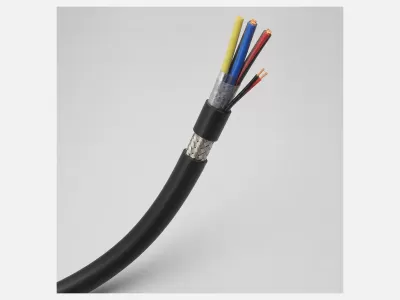
50-Million-Cycle Ultra-High-Speed Linear Motor Power Cable
1.5 Million Cycle Ultra-High-Flex Drag Chain Control Cable with Color Cores
UL2517 105°C 10 Million Cycle High-Count Drag Chain Servo Power Cable
10 Million Cycle Ultra-High-Flex Drag Chain Power Cable with International Cores
50 Million Cycle Ultra-High-Speed Grating Encoder Cable