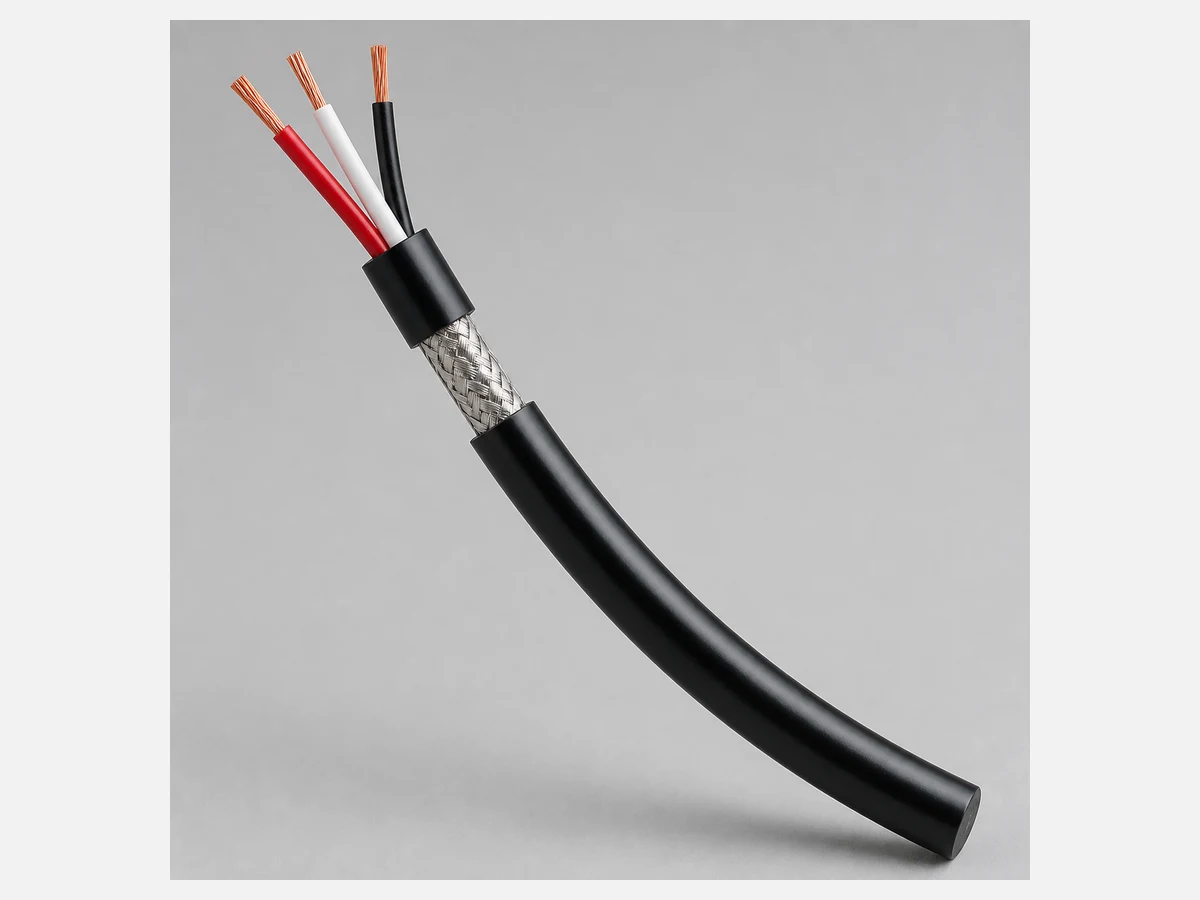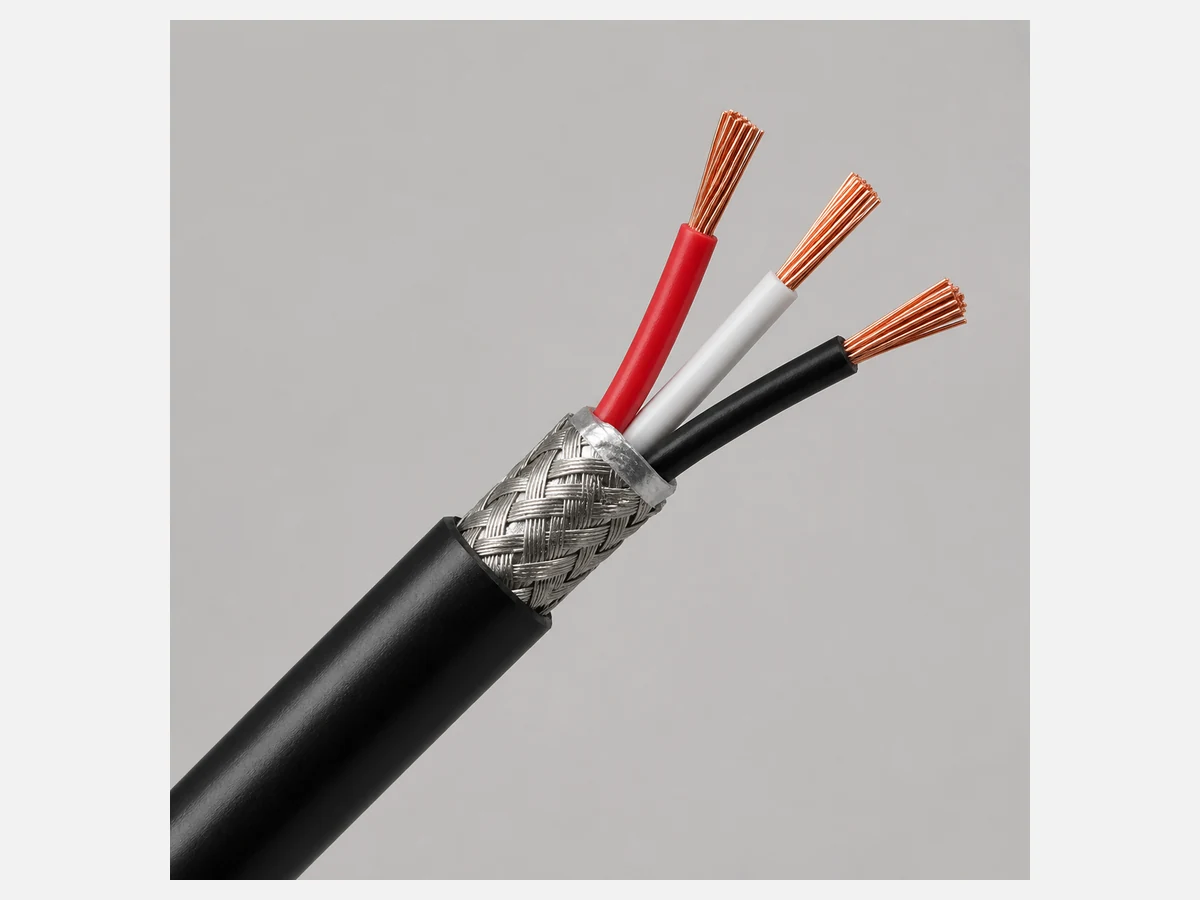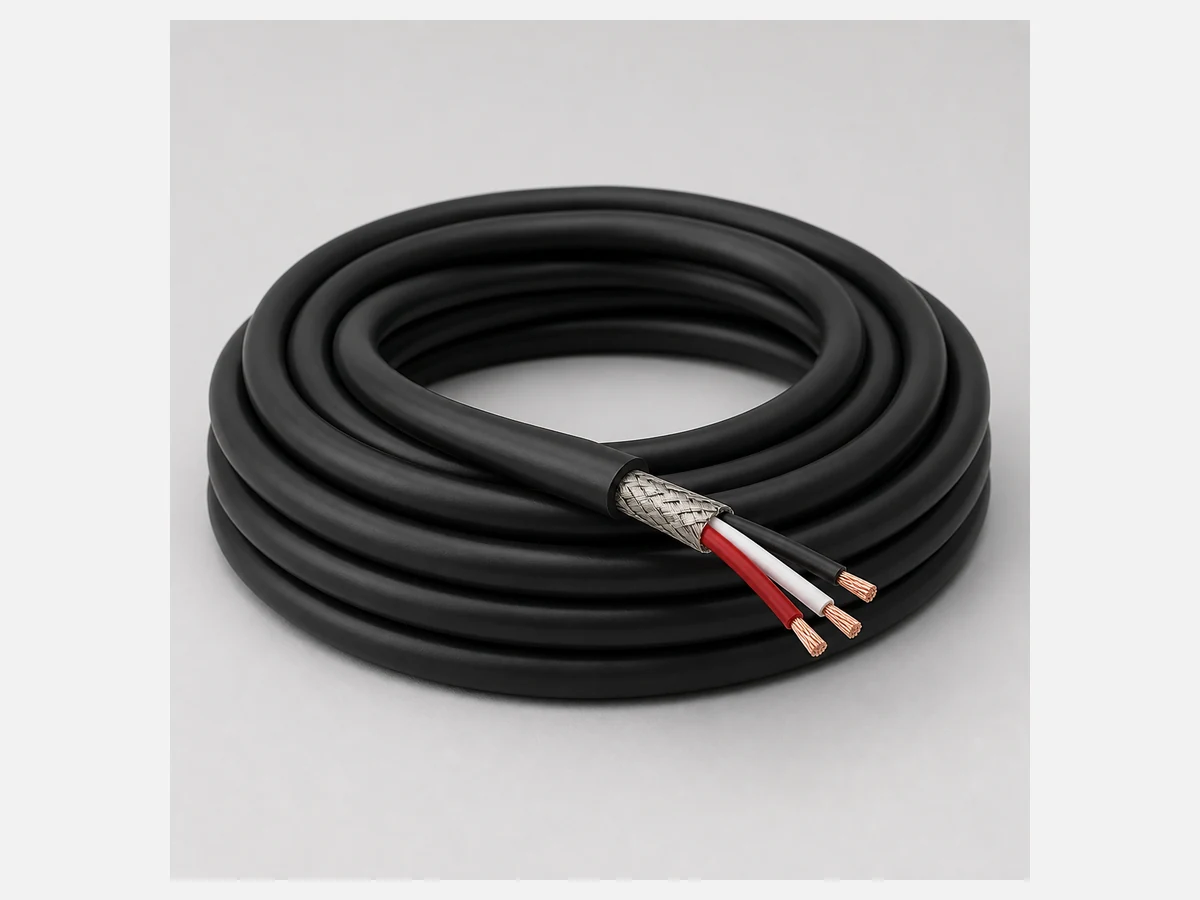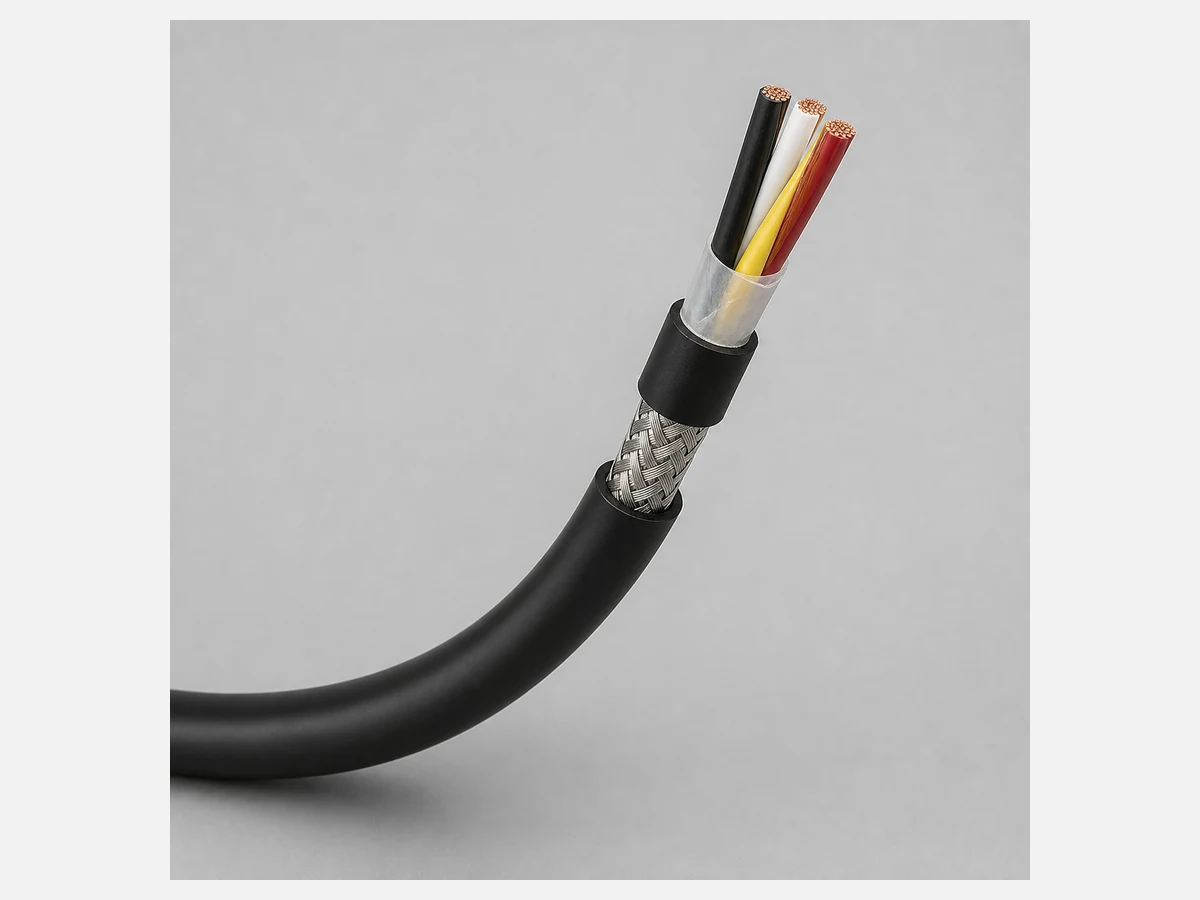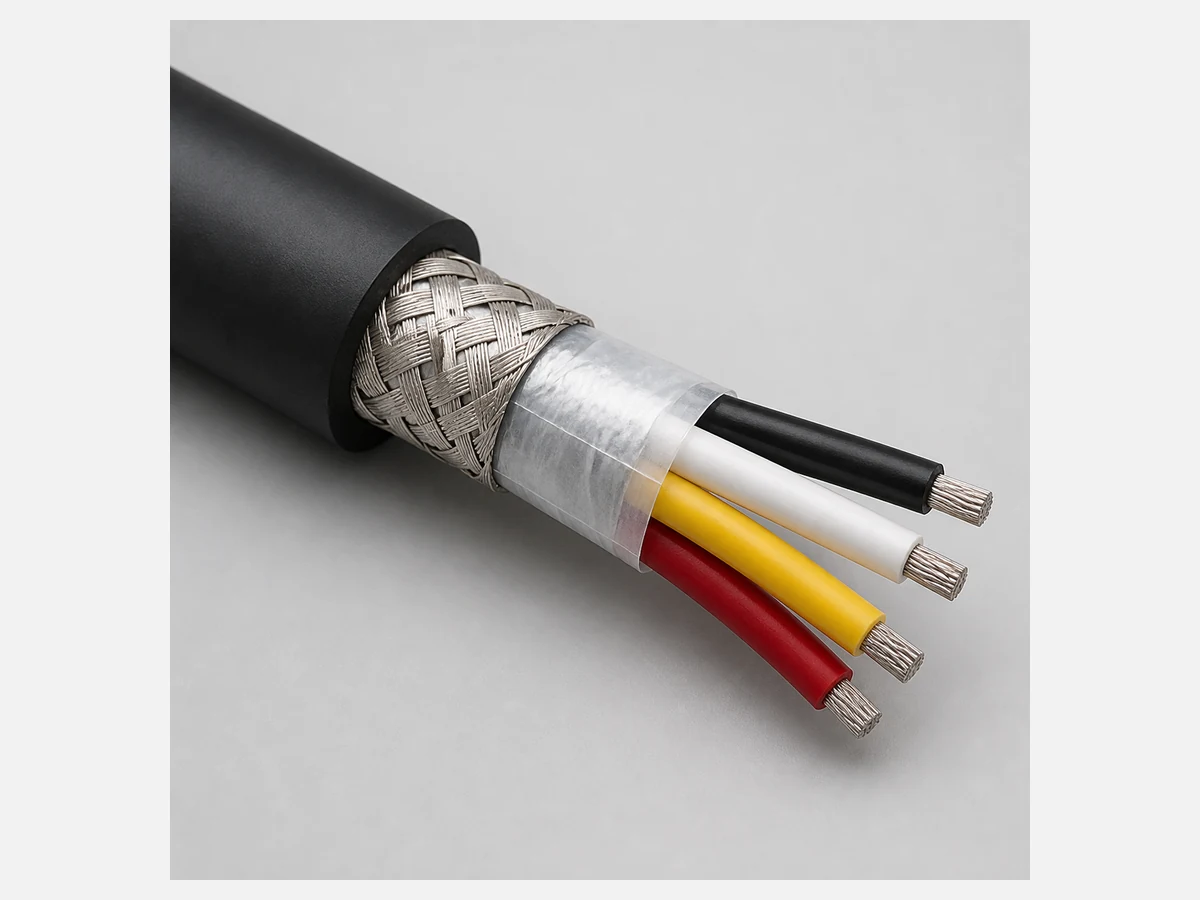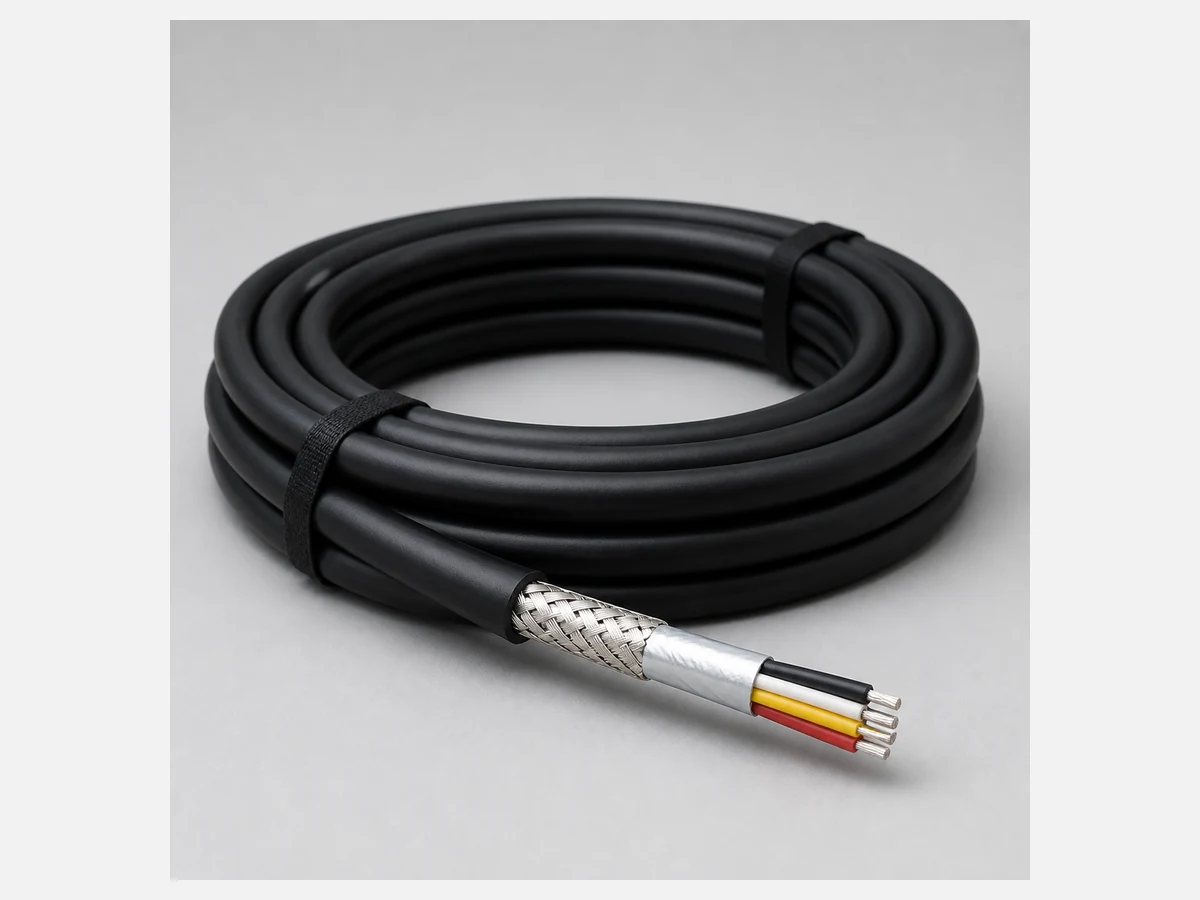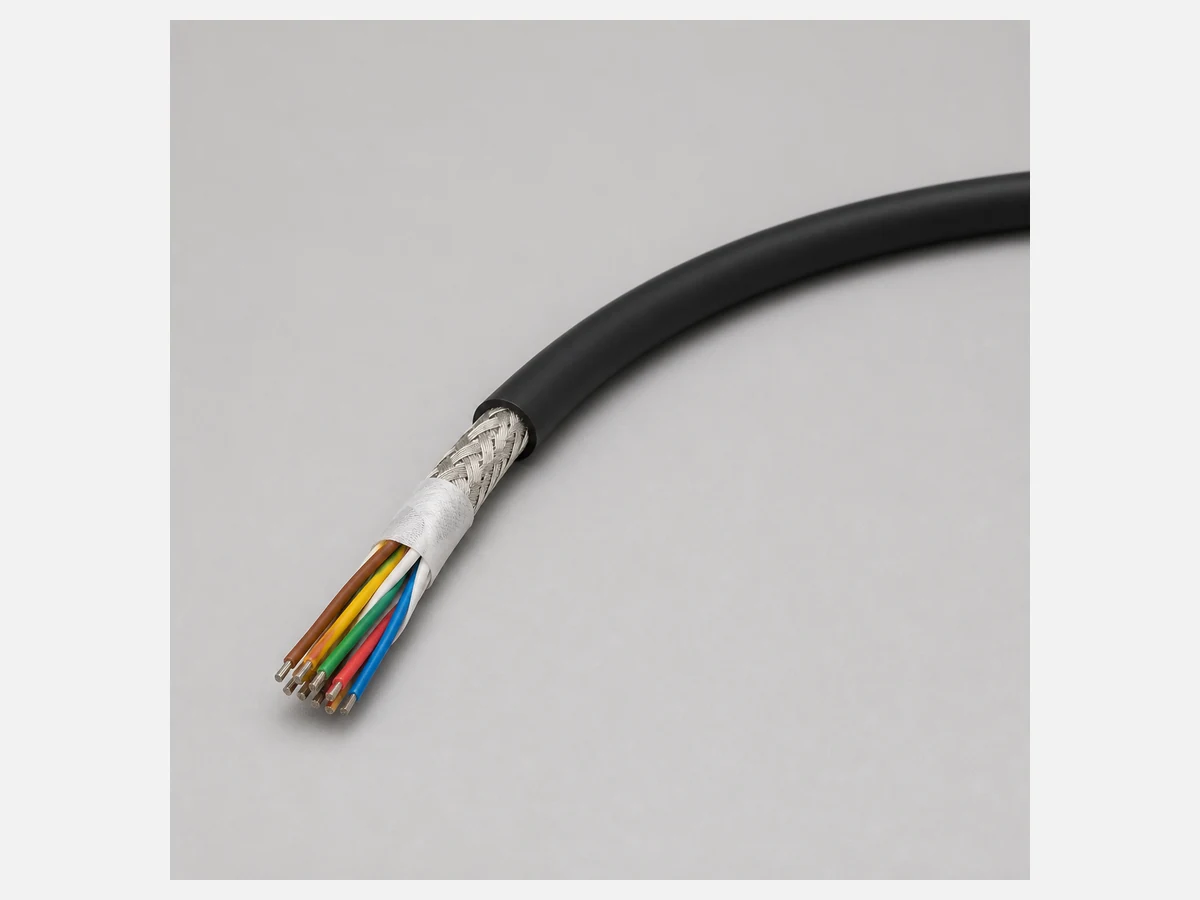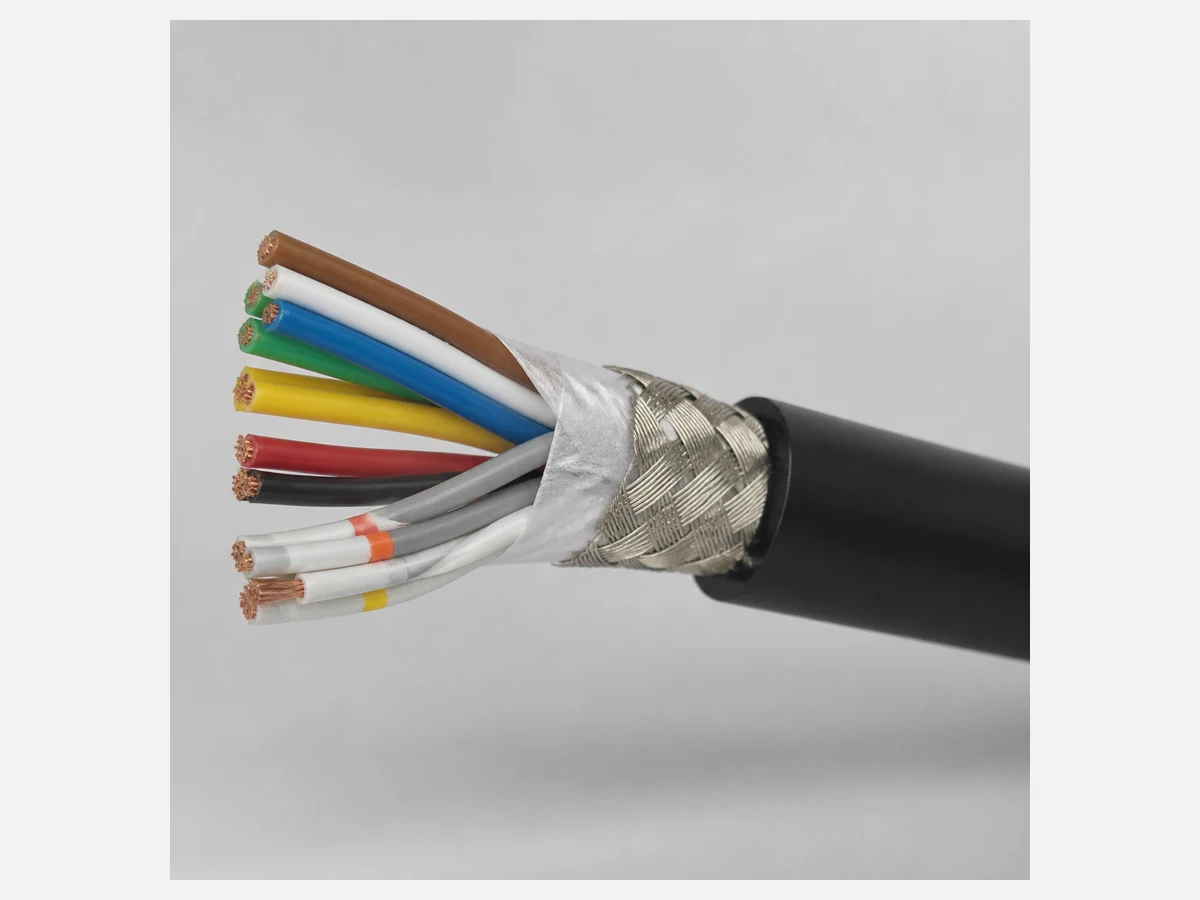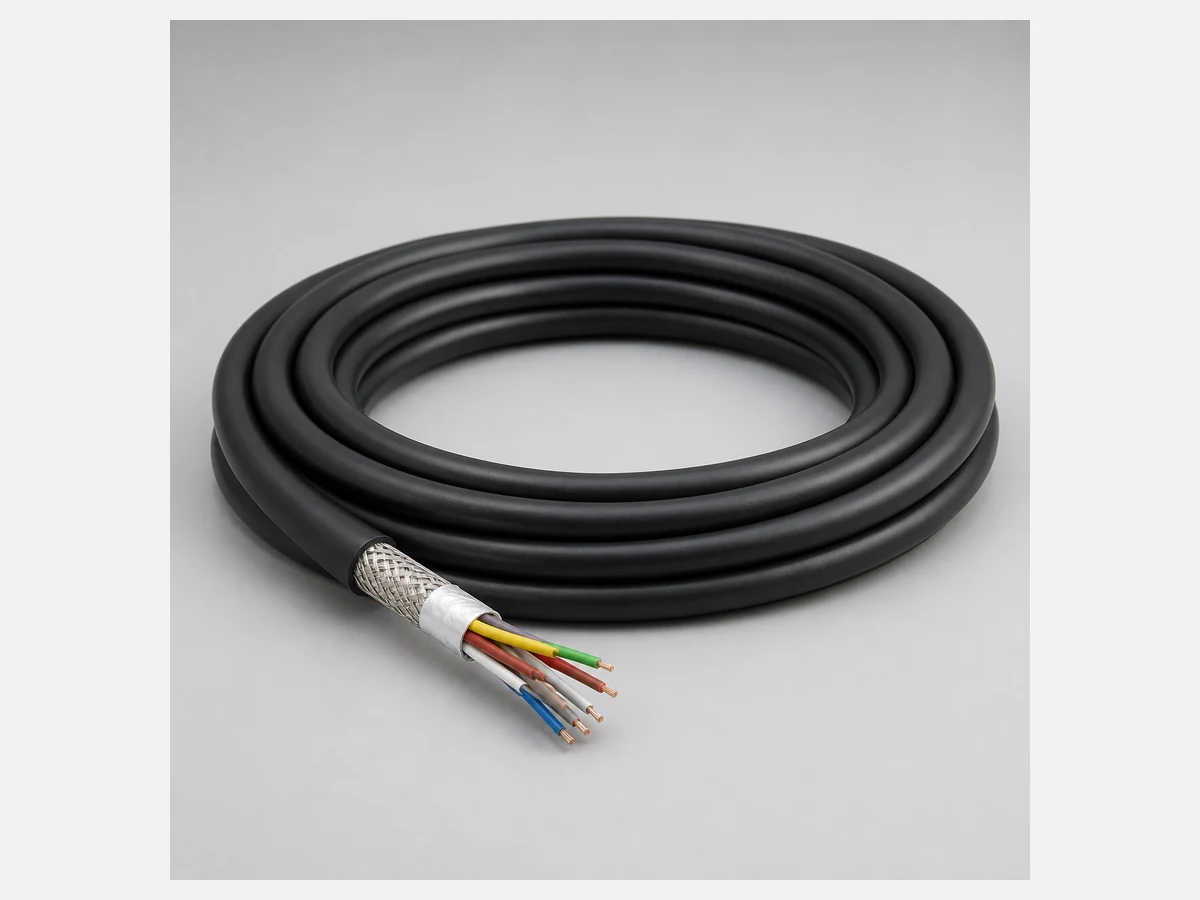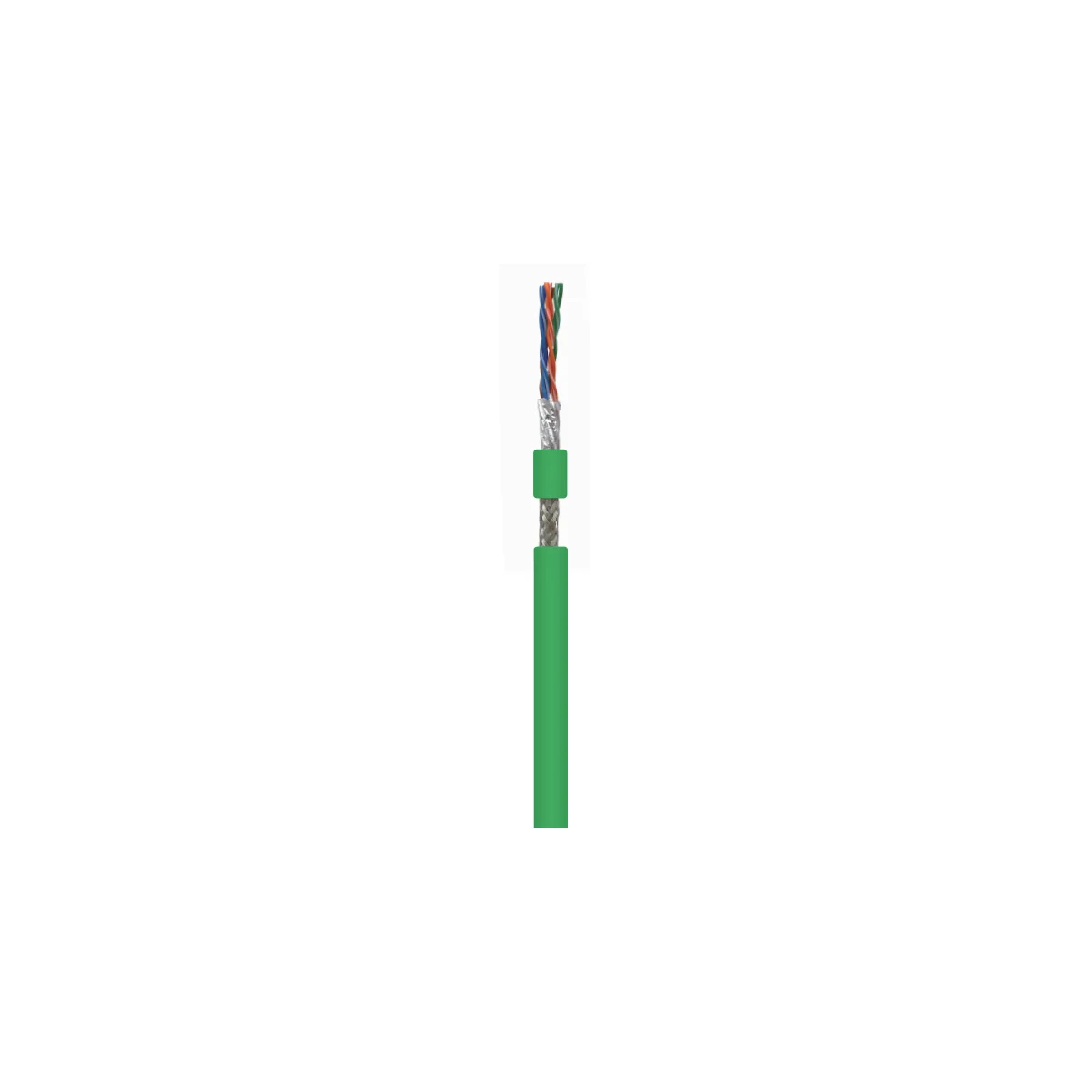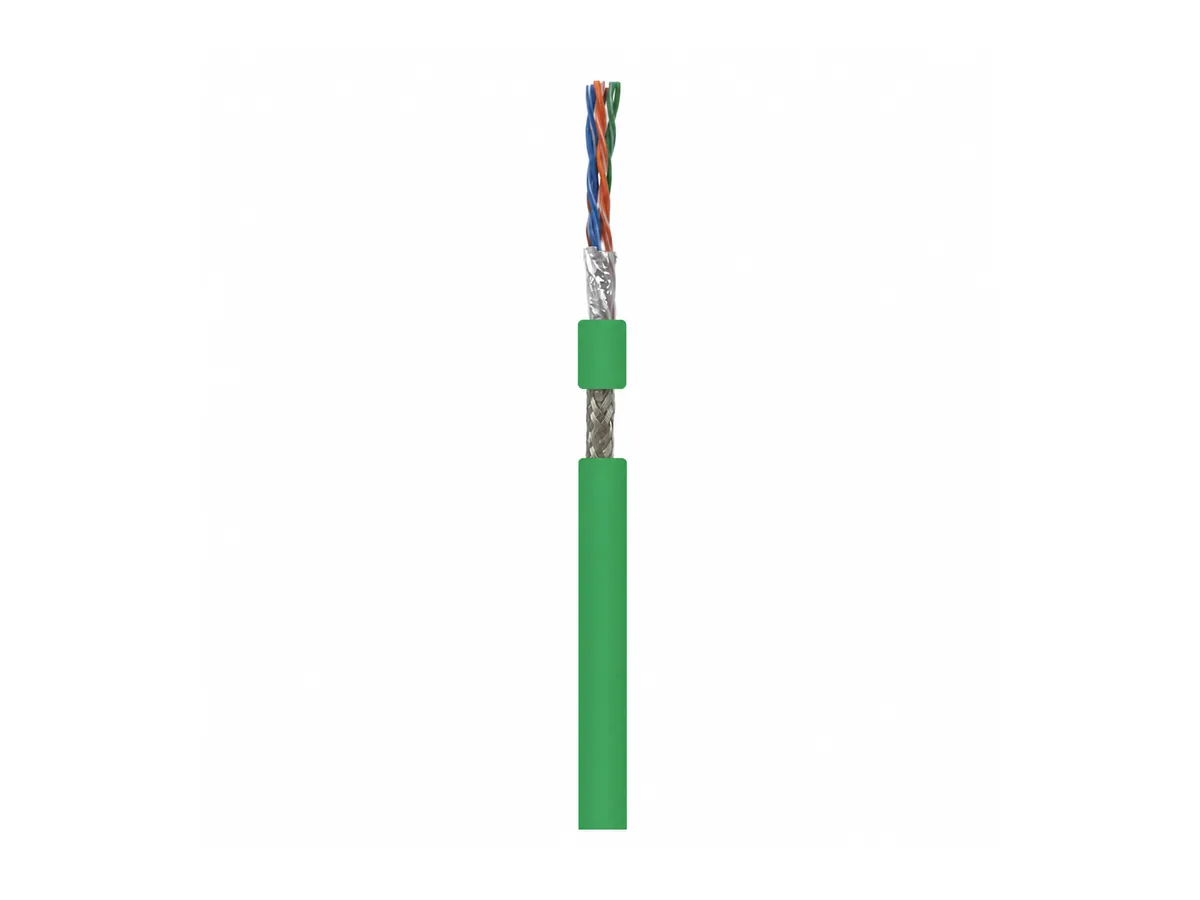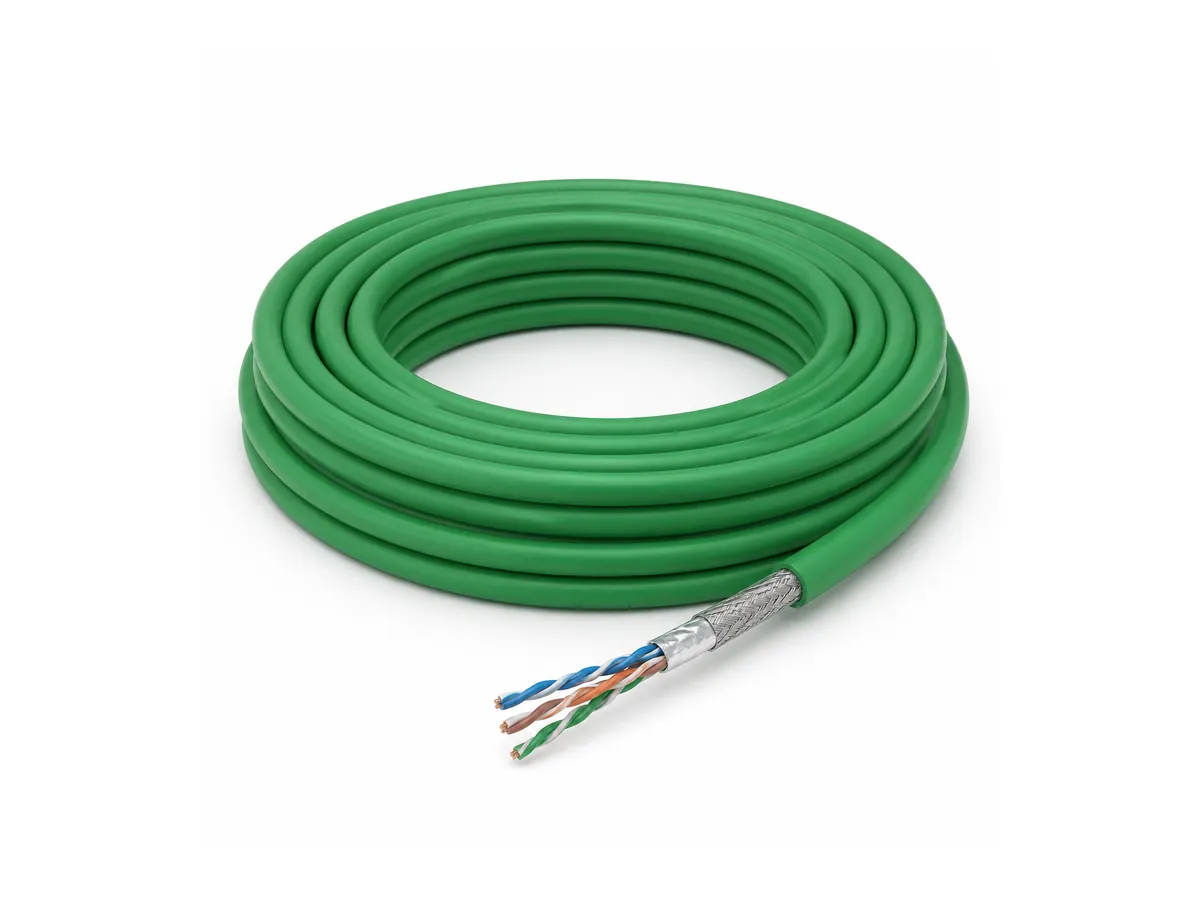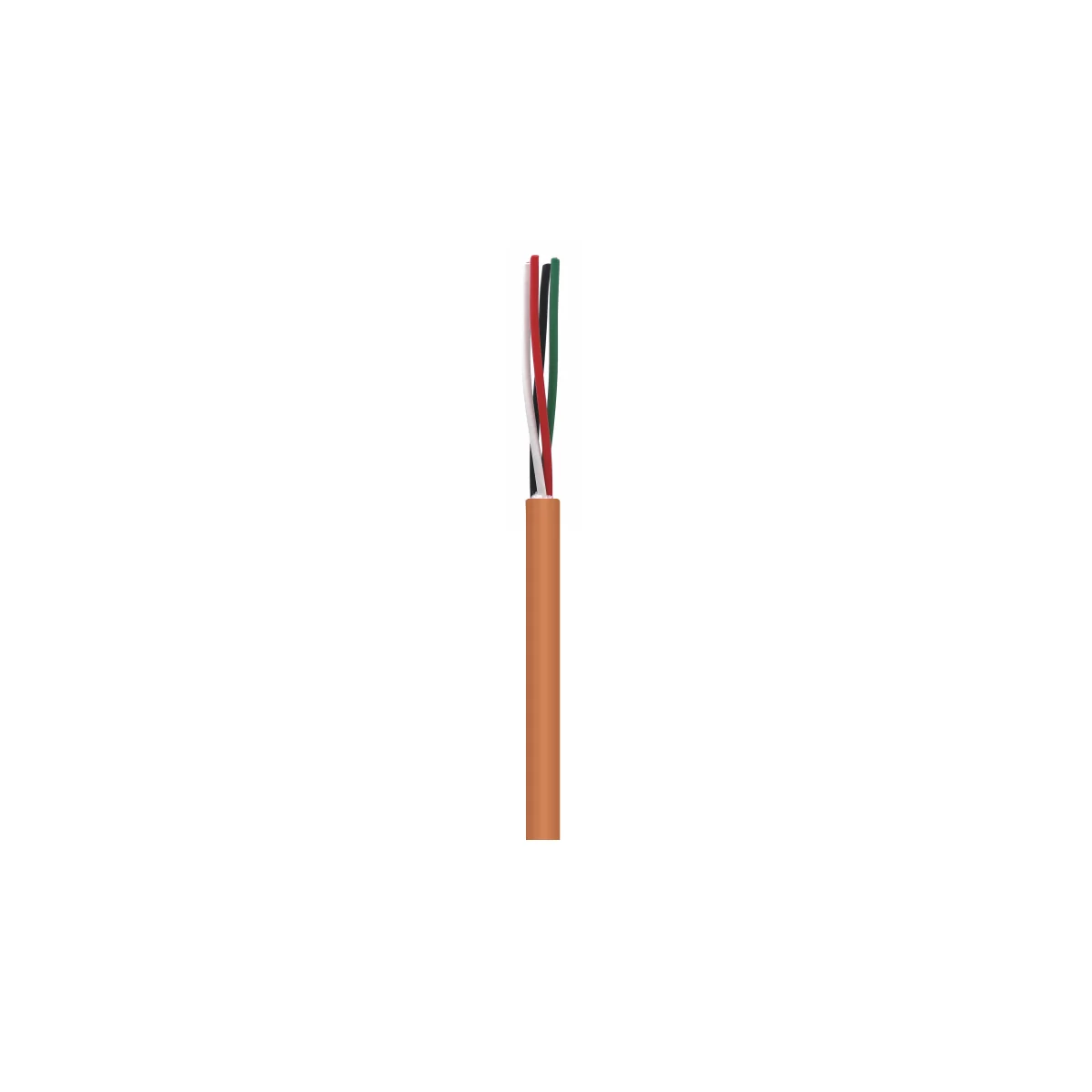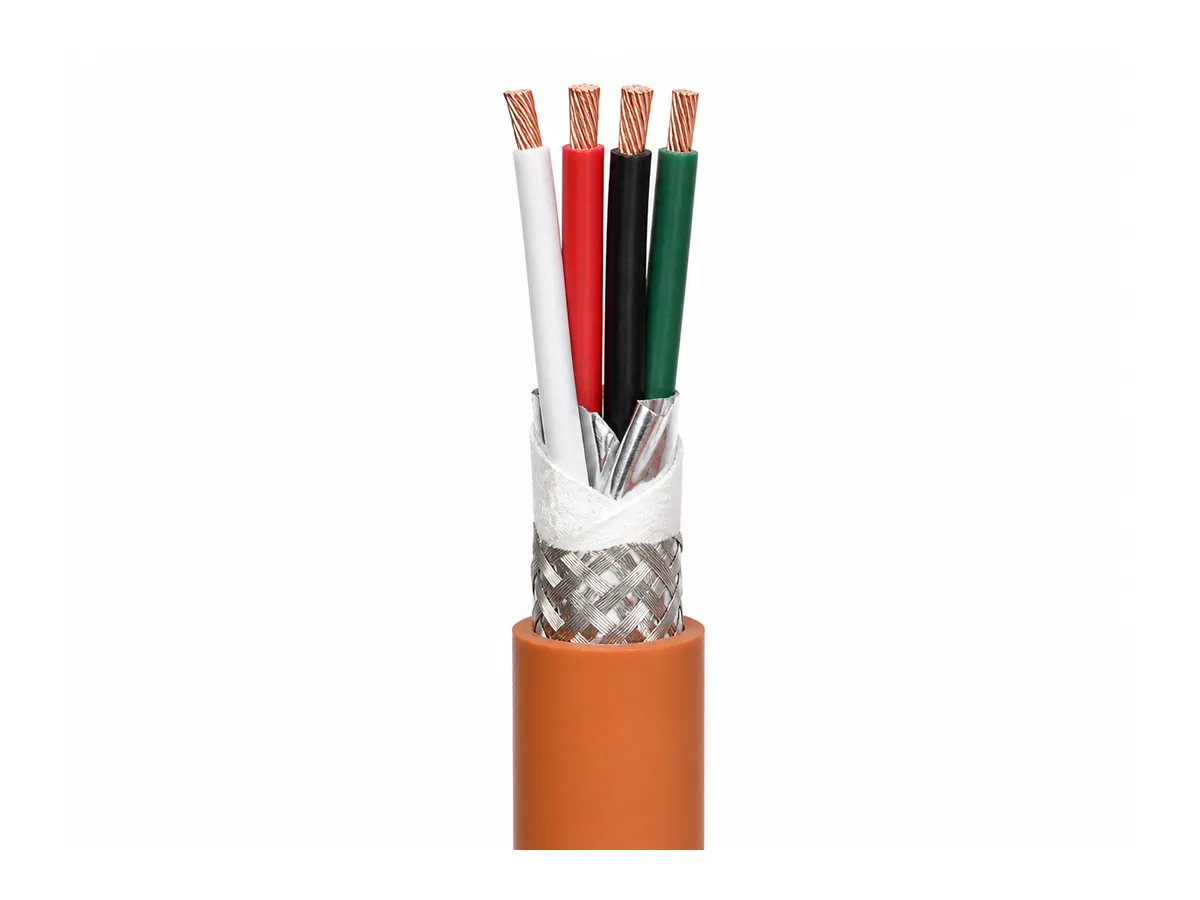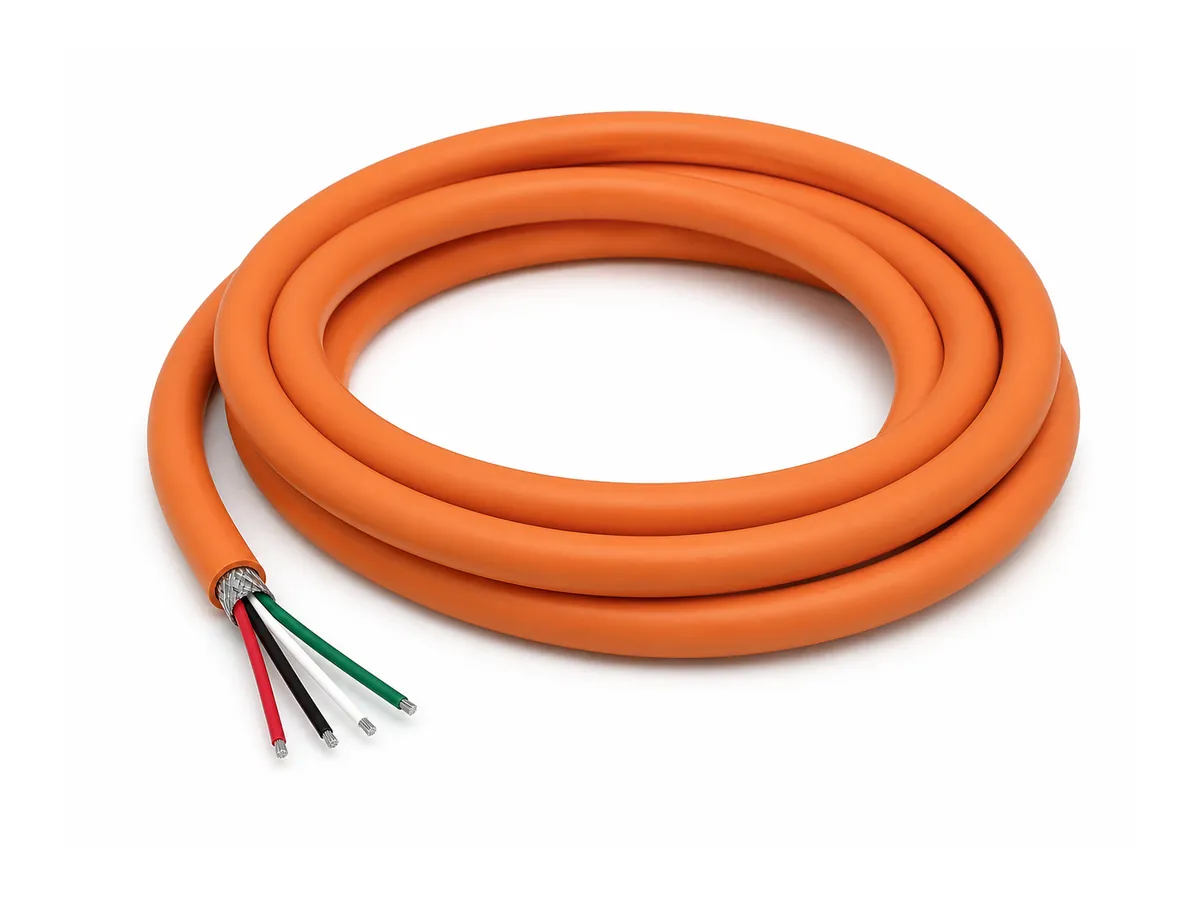
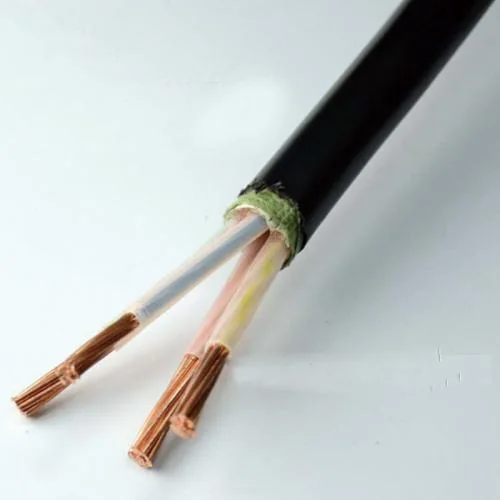
Most cables contain a conductor and insulation, but industrial designs can include many additional layers. The correct structure depends on electrical function, voltage, movement, electromagnetic environment and mechanical exposure. Not every cable requires a shield, armor or separate inner sheath.
1. Conductor
The conductor carries current or signals. Copper and aluminum are common materials, while strand construction determines whether the conductor is intended for fixed installation, general flexibility or repeated movement. Cross-sectional area and resistance must match the electrical requirement.
2. Insulation
Insulation separates energized conductors and supports the specified voltage and temperature rating. PVC, polyethylene, cross-linked compounds, rubber and other materials serve different applications. Thickness, concentricity and electrical integrity are controlled during extrusion and testing.
3. Core Assembly
Insulated cores may be laid together in layers, bundles or twisted pairs. Fillers and central elements can support roundness and stabilize geometry. Moving cables require core arrangements that limit migration and concentrated stress during bending or torsion.
4. Wrapping and Inner Jacket
Tapes or nonwoven wraps separate layers and assist assembly. An inner jacket can provide a stable surface beneath a braid, fill gaps or protect the core assembly. The exact method depends on flexibility, diameter and manufacturing design.
5. Shielding
Foil, copper braid, served wire or combined shields help control electromagnetic interference. Pair shields can isolate individual circuits, while an overall shield surrounds the complete core. Shield effectiveness also depends on grounding and connector termination.
6. Outer Jacket
The jacket protects internal elements from handling and the operating environment. Required performance may include abrasion, oil, coolant, sunlight, water, chemicals, low temperature or flame behavior. These properties should be verified for the specific compound.
7. Armor and Mechanical Protection
Metal tape or wire armor can protect certain fixed-installation cables against mechanical damage. Armor is not a universal cable layer and may be unsuitable for continuous flexing. Its grounding and installation must follow the applicable system rules.
How Construction Changes by Application
Power cable emphasizes current capacity and insulation. Control cable often uses multiple identified cores. Data cable preserves pair geometry. Drag-chain and robot cables balance electrical function with repeated movement. Cable assemblies add connectors, terminals, overmolding and strain relief.
Conclusion
Understanding cable layers helps buyers compare quotations and avoid unnecessary or unsuitable features. The best construction is the one matched to the circuit, installation and environment.
Request Technical Support
Browse our industrial cable range and best-selling cable solutions. Send your application drawing, electrical requirements, motion data and purchasing quantity for a technical review and quotation.